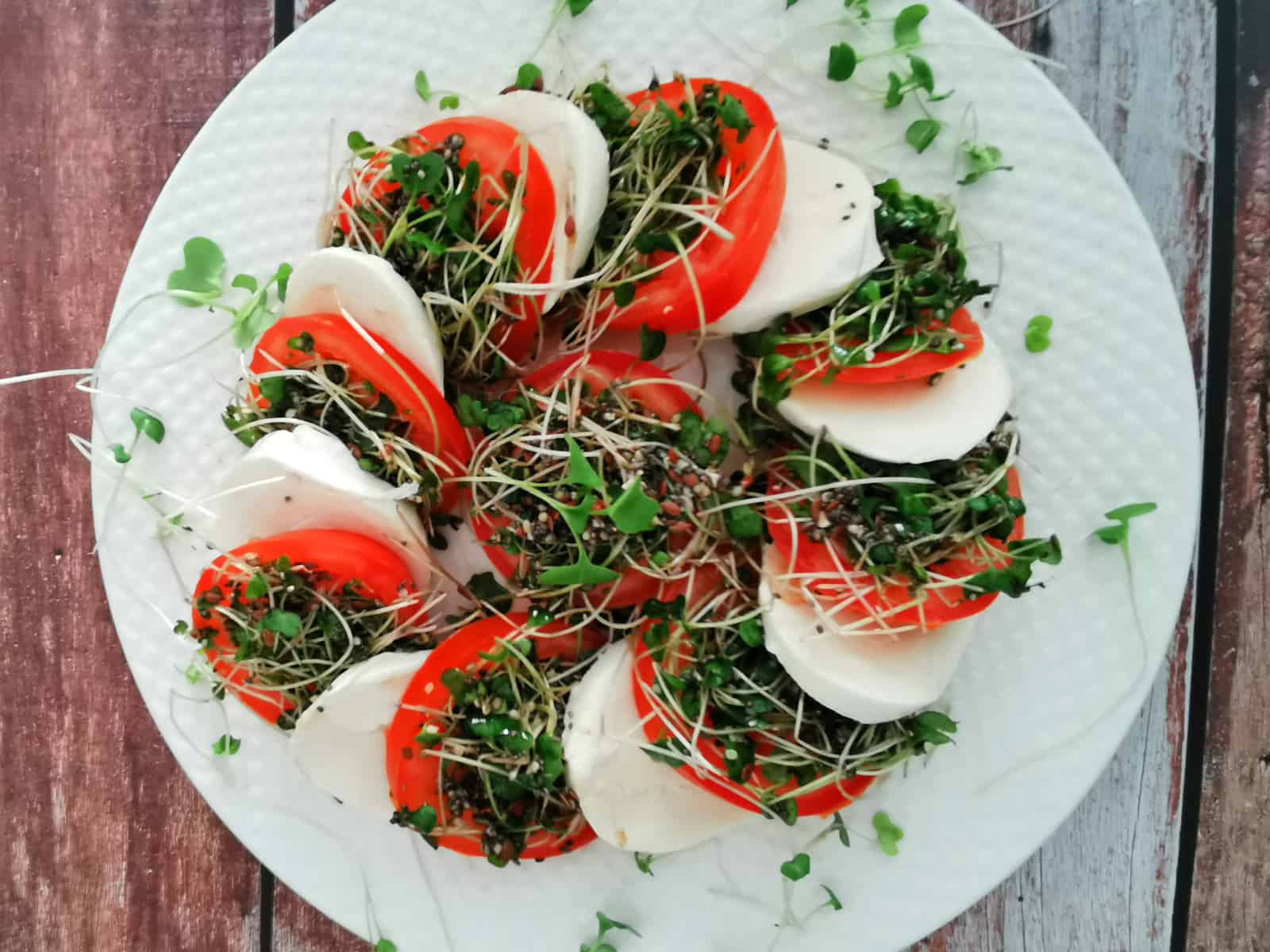
Beet - microgreens are rich in vitamins A, C, K, iron, magnesium, and potassium, are nutrient-dense. They also contain betalains and potent antioxidants.
Broccoli- antioxidant-rich green with a mild, pleasant flavor. Broccoli microgreens sulforaphane is even higher and more potent than sprouts or mature broccoli. The nutrition in broccoli microgreens is tremendous and includes Vitamins A, B, C, E, and K, macro-elements calcium, magnesium, and phosphorous,and micro-elements iron, copper, and zinc.
Longevity Mix: Broccoli / Kale / Arugula - microgreens are packed with vitamins A, B6, vitamin C, and K1, along with minerals like calcium, iron, copper,magnesium, and potassium. In addition to fiber, they are also a rich source of phenolic compounds and carotenoid antioxidants.
Pea - microgreens taste like fresh pea pods. With seven times the vitamin C of blueberries and eight times the folic acid of bean sprouts, pea shoot microgreens are a favorite not only for their fresh taste, but for their high nutritional content including 17% protein.
Radish - microgreens can be considered one of the most nutritiousmicrogreens as they are the most nutrient-packed microgreens. Radishmicrogreens include vitamins A, B, C, E, K, and 30% Protein. They also delivercalcium, iron, magnesium, phosphorus, potassium, and zinc to the human body.
Sunflower - microgreens provide much of your body’s daily dietary requirements. These tiny greens are a good source of vitamins A, C, E, K, and B6 as well as folate.They are a complete source of amino acids as well and contain healthy fats like omega-3s and omega-6s for brain health.